
Event water safety planning: a guide for organisers
What to think about, what to have ready and when to start, if your event puts people in or beside the water: open water swims, triathlons, paddle races, festivals and coastal gatherings.
Start early
Good water safety is planned with you, not bolted on at the end.
Large events can take a year or more to plan. A Safety Advisory Group (SAG), harbour authority, landowner, governing body or insurer may all want to see your water safety arrangements, and each has its own timescale. Bringing your water safety provider in early gives everyone time to get it right, and often saves money because the course and timings can be shaped around the risks.
The water-based risk assessment
The risk assessment is the foundation of everything else. It should look at:
- The water: sea, river, lake or dock; tides, flow, depth, temperature and how they change through the day.
- The people: how many, their age and experience, and whether they are taking part or watching.
- The activity: a mass swim start, a paddle race spread over kilometres, or a crowd at the water’s edge.
- The environment: weather, wind direction, other water users, boat traffic and access for emergency services.
- Time of day: darkness, alcohol and fatigue all change the risk at festivals and evening events.
The water safety plan
The plan turns the risk assessment into who does what, where and when. A good plan covers the team and their qualifications, the craft and equipment and where each is positioned, communications, how participants are counted in and out, the go/stop criteria, how a casualty is handed to your medical provider, and an emergency action plan for the incidents you are most likely to face.
It should be written for the people who will read it: your SAG, your insurer, your governing body and the team on the day.
Choosing the level of cover
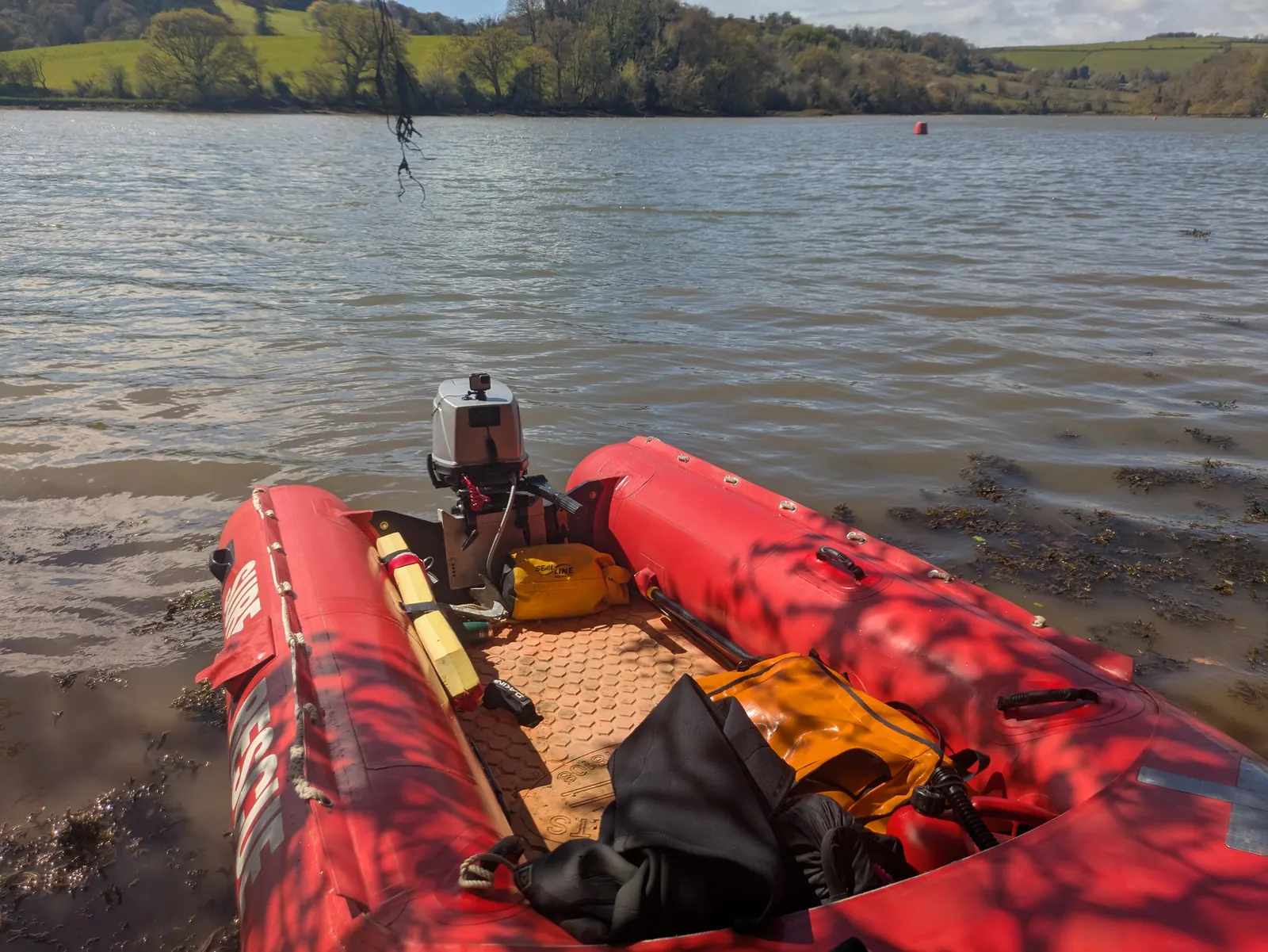
There is no single ratio that fits every event. The right team depends on the course, the conditions, the numbers and the abilities of the people on the water, and your governing body may set its own minimum. As a guide to scale, we used 10 lifeguards and 2 rescue boats for the Looe Island Swim, and 25 lifeguards and 3 rescue boats on the busiest day of the ICF SUP World Cup.
Whatever the size, someone needs to lead the water team. An Event Water Safety Manager links the water to your event control and should have the authority to stop activity if conditions change.
On the day
- Brief the whole team, including stewards and marshals near the water.
- Check conditions against the go/stop criteria, and be ready to shorten or move a course.
- Keep radio contact between the water and event control, and log decisions.
- Count everyone in and out of the water.
- Debrief afterwards and feed what you learn into next year’s plan.
Organiser’s checklist
- Date, venue and the exact stretch of water confirmed.
- Expected numbers and the type of participants.
- Who needs to approve the plan: SAG, harbour authority, landowner, governing body, insurer.
- Water-based risk assessment.
- Event water safety plan and emergency action plan.
- Go/stop criteria set.
- Medical provider and handover point agreed.
- Communications plan between the water and event control.
- Team briefing and post-event debrief.
We supply all of this with our cover. See our event water safety.
Planning questions
How far ahead should I plan water safety for an event?
As early as you can. Large events can take over a year to plan, and a Safety Advisory Group, harbour authority or landowner may need to see your water safety plan well before the day. If your event is close, get in touch anyway and we will tell you honestly what is possible.
What documents will I need?
Usually an event water safety plan, a water-based risk assessment and an emergency action plan, plus team briefings on the day. Your governing body, insurer or Safety Advisory Group may ask for more, so we'll check what they need early on.
Who decides whether the event goes ahead on the day?
You, with your Event Water Safety Manager, using go/no-go criteria set in advance. The Event Water Safety Manager should also have the authority to stop activity on the water if conditions change.
Do you cover events anywhere in the UK?
Yes. We are based in Devon and we provide event water safety across the whole UK.
Water safety for your event, anywhere in the UK
We are based in the South Hams, Devon, and we provide event water safety anywhere in the UK. The pages below show some of the places and events we cover; they are examples, not a limit. Tell us where your event is and we will plan the team, the craft and the travel around it.
-
Devon
Torbay, the South Hams, the Dart and the rest of Devon, where we are based.
Event water safety in Devon -
Cornwall
Harbour swims, coastal events and paddle races across Cornwall.
Event water safety in Cornwall -
Wales
Festivals, swims and paddle events in Wales, including Tunes on the Bay.
Event water safety in Wales -
Open water swims and triathlons
Lifeguards on boards, rescue boats and a go/no-go call for swims and triathlons.
Swim and triathlon safety cover -
SUP and paddle races
Course cover for SUP races, paddle festivals and canoe events.
SUP and paddle race safety cover -
Festivals and waterside events
Water safety that fits in with your event control, medical cover and SAG.
Festival water safety cover -
Anywhere else in the UK
England, Scotland, Wales and Northern Ireland: rivers, lakes, harbours, beaches and docks.
Ask about your event
Planning an event on the water?
Tell us your date, venue, activity and expected numbers and we will help you plan the right cover.